What is the kedusha in washing one's hands before and after eating? From Aley Shor volume 1.

What is the kedusha in washing one's hands before and after eating? From Aley Shor volume 1.
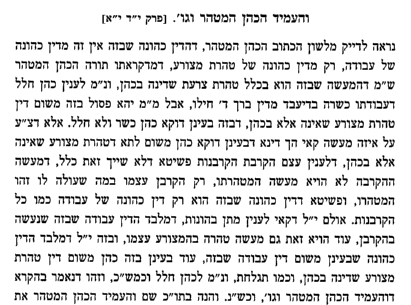
השמר בנגע הצרעת לשמר מאד ולעשות ככל אשר יורו אתכם הכהנים הלוים כאשר צויתם תשמרו לעשות (Ki Teitzey 24:8.) The Gemirah in Shabbos (132b) is clear that this not only applies to tamah negaim but to tahor negaim as well. Rashi identifies the tahor nega as the בהק and one who the nega covered their entire body. The Tosfot Rid disagrees with Rashi's mentioning of בהק because he argues that is not called a nega at all and the case of when the nega spread over the whole person also doesn't make sense for the person is not going to skin himself. Instead he learns the Gemorah as referring to a case of a nega that stood for two weeks that was susceptible to tumah if it developed signs of tumah on such a nega there is an issur to cut it off. This is the opinion of Tosfot Shavuot (4a) as well. We see Rashi holds that the בהק is considered a nega and that the issur of cutting off the nega has nothing to do with attempting to rid one's self of tumah. The Rashba in Shabbos (133a) asks why is cutting off the nega to do a milah considered a דבר שאינו מתכוין just because the person's intent is merely to do the mitvah, the person still has full intent to do the act of cutting? He answers that the issur of cutting the naga is not to do the act of cutting it off, the issur is to try to cause taharah without the proclamation of the kohan as the possuk says ככל אשר יורו אתכם הכהנים הלוים. Since the person is not trying to cause tahara, rather to do the mitzvah, it is a דבר שאינו מתכוין. The Sfas Emes asks that the aforementioned Gemorah contradicts this for the Gemorah says the issur applies to a tahor nega as well? The Rashba must have learnt like the Rid and Tosfos and since there was a possibility of tumah it is included in the issur of trying to be metahar the nega. This approach is supported by the Gemorah Shabbos (94b) that says if there are three white hairs in the nega and one cuts off one of them there is no lashes because the nega is still tamah because of the two hairs. We see the issur is to be metahar the nega. (See Mishne L'melech Tumas Tzaaras 10:1.) A נ"מ between Rashi and the other Rishonim may be on a nega that is less thabn the size required for it to become tamah, less than a גריס if there will be an issur in cutting it off. According to Rashi yes, for it is still a nega but according to the other Rishonim no for there is on possibility of tumah (see Igrot Moshe back of volume 1 Kodshim siman 25.)
The Gemorah Arachin (3a) has a רבוי to include a katan that will have tumas negaim. The Kli Chemda in Lech Lecha brings a question from the Kutna Rav according to the הו"א that a katan does not have tumas negaim why would we need a possuk to tell us that you can cut off the nega of a katan to do milah, there is on tumas negaim on a katan? His question assumes like the approach of the Rishonim not like Rashi
The Mishna in Negaim (3:1) says that a kohan must pronounce the nega tamah or tahor. The Gemorah in Yoma (42a) wants to bring a proof from the fact that a kohan needs to shect the parah adumah that shechita is considered an avodah. The Gemorah says that shechita is not an avodah and parah adumah requires a kohan just like seeing a nega. The kohan that sees the nega does not need to be kosher for the avodah, it can be a baal mum or even a katan (see Rambam Ch. 9 of Tumas Tzaaras) and therefore presumably he does not have to wear the priestly garments. Similarly, one would assume the same thing applies to shecting of the parah adumah (Chazon Eish Parah 8:3.) However, the Tosfot Yeshanim and Rosh in Yoma say that the kohan that shects the parah adumah must wear the priestly garments. Why? The Minchas Avrohom (Torah Kohanim pg. 98) suggests that they must hold that garments are not worn for the sake of doing an avodah but that it is a din in the actions of the parah that it requires priestly garments. That would explain why the Rambam holds even if the kohan gadol does the avodat haparah he still wears the priestly garments of a regular kohan (see Laws of the Parah 1:12 and Mishne L'melech.) Why does he not wear his regular priesly garments or at least the bigday lavan he wears on Yom Kippur? It must be the Rambam understood this is a unique law of wearing priestly garments nothing to do with avodah and that is fulfilled with the bigday lavan.
The Briskor Rav suggests that this need for a kohan extends to the taharah of the metzorah as well.
כִּ֤י תָבֹ֙אוּ֙ אֶל־אֶ֣רֶץ כְּנַ֔עַן אֲשֶׁ֥ר אֲנִ֛י נֹתֵ֥ן לָכֶ֖ם לַאֲחֻזָּ֑ה וְנָתַתִּי֙ נֶ֣גַע צָרַ֔עַת בְּבֵ֖ית אֶ֥רֶץ אֲחֻזַּתְכֶֽם. Rashi comments ונתתי נגע צרעת – בשורה היא להם שהנגעים באים עליהם, לפי שהטמינו אמוריים מטמוניות של זהב בקירות בתיהם כל ארבעים שנה שהיו ישראל במדבר, ועל ידי הנגע נותץ הבית ומוצאן. If the point is to give the treasures to Klal Yisroel why does one need to go the trouble of destroying their house and why not just give a treasure map to Klal Yisroel? The Sfas Emes 5639 says אמנם וודאי גוף הענין נגעי בתים הוא פלא גדול והוא אות ומופת על קדושת בנ"י שמביאין קדושה וטהרה גם במקומות מושבותיהם. ויש ללמוד ק"ו דכתיב אבן מקיר תזעק וכפיס מעץ יעננה על החטא שקורות ביתו של אדם מעידין. מכ"ש מדה טובה מרובה שהצדיק צריך להביא הרגשת קדושה בכל השייך אליו וגם בצומח ודומם. והנה בנ"י כן עשו שהוציאו ארץ כנען מיד הטומאה והכניסוהו בקדושה שכשנקרא ארץ ישראל השרה הבורא ית' שכינתו בבהמ"ק. וזה בכלל ובכל מאודך שצריכין להביא לכל הנכסים הארת הקדושה. ומצד זה יכול להיות טומאת נגע צרעת גם בבתים. וזאת הבשורה טובה שיוכלו לתקן כל המקומות ג"כ. The treasure is not a chest filled with gold, diamonds and pearls, the treasure is that you can find kedusha even in the stones and wood of the house! The nega on the house is a siman that even the inanimate objects used to build a house have kedusha and the tumah of the gentiles must be removed. With this idea we can also explain why the Torah uses the strange terminology of אֶ֥רֶץ אֲחֻזַּתְכֶֽם? The Torah is hinting that even in the אחזה, in the land a person owns, there is kedusha
Another interpretation is that it is only when the house is destroyed that a person can find the treasure. Just as a tree grows only after a seed is planted and crushed into the ground, so too sometimes it is necessary for a person to destroy their house in order to find the treasure within. In the Yom Yom for 17 אייר it says "On Lag Ba'Omer, about 5604 (1844), the Tzemach Tzedek related this teaching of the Baal Shem Tov: It is written, "For you (Israel) shall be a land of desire, says the Lord of Hosts". Just as the greatest scientists will never discover the limits of the enormous natural resources which the Almighty has sunk into the land ("everything came from the earth"), neither will anyone ever find the limits of the great treasures which lie within Israel - G‑d's "land of desire." The Baal Shem Tov concluded: I want to make Israel yield the kind of produce which the Almighty's "land of desire" is capable of yielding." The house is a siman for the treasure that a person can find within themselves when one knocks down the barriers that stand between themselves and the treasure within.
What is the connection between the death of the Nadav and Avihu and the parsha of the forbidden animals? The parsha of the avodat yom kippurim follows after it mentions the death of Nadav and Avihu. What is the connection between the death of Nadav and Avihu and the avodah of Yom Kippur? Why was Aharon's acceptance of the death of his sons accepted through silence and not through the normal way of talking about the deceased?
The midrash (11:6) says וַיַּרְא כָּל הָעָם וַיָּרֹנוּ וַיִּפְּלוּ עַל פְּנֵיהֶם, אָמַר רַב שְׁמוּאֵל בַּר נַחְמָן, כָּל שִׁבְעַת יְמֵי הַסְּנֶה הָיָה הַקָּדוֹשׁ בָּרוּךְ הוּא מְפַתֶּה אֶת משֶׁה שֶׁיֵּלֵךְ בִּשְׁלִיחוּתוֹ לְמִצְרַיִם, הֲדָא הוּא דִכְתִיב (שמות ד, י): גַּם מִתְּמוֹל גַּם מִשִּׁלְשֹׁם גַּם מֵאָז דַּבֶּרְךָ אֶל עַבְדֶּךָ, הֲרֵי שִׁשָּׁה, וּבַשְּׁבִיעִי אָמַר לוֹ (שמות ד, יג): שְׁלַח נָא בְּיַד תִּשְׁלָח, אָמַר לוֹ הַקָּדוֹשׁ בָּרוּךְ הוּא, משֶׁה, אַתְּ אוֹמֵר שְׁלַח נָא בְּיַד תִּשְׁלָח, חַיֶּיךָ שֶׁאֲנִי צוֹרְרָה לְךָ בִּכְנָפֶיךָ, אֵימָתַי פָּרַע לוֹ, רַבִּי בֶּרֶכְיָה אָמַר רַבִּי לֵוִי וְרַבִּי חֶלְבּוֹ, רַבִּי לֵוִי אָמַר כָּל שִׁבְעַת יְמֵי אֲדָר הָיָה משֶׁה מְבַקֵּשׁ תְּפִלָּה וְתַחֲנוּנִים שֶׁיִּכָּנֵס לְאֶרֶץ יִשְׂרָאֵל, וּבַשְּׁבִיעִי אָמַר לוֹ (דברים ג, כז): כִּי לֹא תַעֲבֹר אֶת הַיַּרְדֵּן הַזֶּה. רַבִּי חֶלְבּוֹ אָמַר כָּל שִׁבְעַת יְמֵי הַמִּלּוּאִים הָיָה מְשַׁמֵּשׁ בִּכְהֻנָּה גְדוֹלָה וְכַסָּבוּר שֶׁלּוֹ הִיא, בַּשְּׁבִיעִי אָמַר לוֹ, לֹא שֶׁלְךָ הִיא אֶלָּא שֶׁל אַהֲרֹן אָחִיךָ הִיא, הֲדָא הוּא דִכְתִיב: וַיְהִי בַּיּוֹם הַשְּׁמִינִי. What is the connection between Moshe's refusal to take the job of being the leader and redeemer of Klal Yisroel and his loss of the kehunah gedolah and the inability to enter Eretz Yisroel?
Moshe Rabbenu refused to take up the shlichut that Hashem sent him upon because he was כבד פה וכבד לשון. The Maharal (Gevurot Ch. 28) explains that since Moshe was total ruchni he could not fit into the worldly bounds that words place upon ideas. This is why Moshe Rabbenu was the fitting leader for the generation of the midbar, the generation that lived in a miraculous manner. The mishkan was a place where heaven met earth. It was a combination of where the finest, beautiful items were used to serve G-d. Entering Eretz Yisroel provided this challenge for everyone. People had to ted to earthly matters that are to be used for holy endeavors. Moshe Rabbenu was not the man for this mission and the kehuna gedolah was given to Aharon and the entery to Eretz Yisroel was led by Yehoshua.
Nadav and Avihu inherited from their father the ability to bring kedusha to the gashmi as well but they went as step further. ויחזו את האלקים ויאכלו וישתו. They did not see this as a chutzpah because to them the gashmi was just as holy as the ruchni. Their אש זרה was trying to emulate the avodah of the שיער לעזעזל that we offer on Yom Kippur. The sair also counts as an offering to G-d. Even our sins, that which is not desired becomes part of an offering to G-d. Nadav and Avihu tried to accomplish the same thing with their offering thas was חוץ לתחום, not in the normal prescribed order. In theory their practice may not be wrong but the time for such an ability that even an אש זרה can be part of the avodat Hashem has not been reached yet. That is why Aharon's נחמה was not expressed in words for since the reason for their death involved incorporating the gashmi into the ruchni the nechama had to go the opposite direction and could not be limited to words. Therefore, following their deaths the Torah gives boundaries to what foods one can eat for we are bound by rules of kedusha and that which can not be incorporated. (Based upon articles here and here.)

